A contact form on a site builder.
They lend their own money to small businesses. We built the site — and then the software the lending actually runs on. They own all of it.
The business.
The Funding Depot is a direct lender in New Jersey. Small businesses apply for $5,000 to $500,000 and get an answer the same day — often the same hour. Brokers send them deals too, and get paid on the ones that fund.
They lend their own capital. That one fact decides everything about the software, because a broker who places a deal elsewhere is out a commission, and a direct lender who reads a statement wrong is out the money.
And a website that did nothing.
A drag-and-drop builder, a handful of pages, and one contact form at the end of them.
Slow, thin, and effectively invisible in search — nothing on the page answered the questions a business owner actually types before they borrow money. The form collected a name and a message, and then a human started from zero.
Behind it, the lending ran on email, spreadsheets and a stack of software rented from other people.
So we asked a different question.
Not “what should the website say”What happens between the application and the wire?
Because that is where the company actually is. A lender's product isn't a page — it's a decision, made in a few hours, on documents someone has to believe.
So we built the decision. The site is the front of it.
The path a deal takes.
Eight steps to the wire, and three more stages for the ones that stop. Every one of them used to be an email, an attachment or a phone call.
An application from the site, or a file from a broker, opens a deal. Statements get read. The underwriting checks run. Pricing produces an offer, the offer produces a contract, the contract gets signed in the merchant's own portal, and funding writes the servicing schedule.
Terms are copied onto the contract, never looked up from the offer. An offer edited afterwards can't change what somebody signed — and the executed PDF is written exactly once, the moment the last signature lands.
Reading the bank statements.
Four months of PDFs is the whole underwriting file. Reading them was the job the software had to take.
A bank statement prints its own totals. So a machine reading one can be checked against the page it read.
Local, instant, and it can stop the process before a paid step ever runs.
Dates, descriptions, amounts, running balances. The only step that costs anything.
Opening balance, plus credits, less debits, against the closing balance the statement printed.
Inserting a deposit into a statement takes one edit. Making every running balance after it agree takes two hundred, and almost nobody does that — which is why the arithmetic catches more than the file forensics do.
None of it concludes fraud. Each check reports the sum that failed and by how much, because there are honest reasons a statement doesn't reconcile and an underwriter can tell those apart far better than a rule can. Where a figure couldn't be read, the check says so rather than failing — a missed read must never look like a forgery.
Three doors, one system.
Merchants, brokers and staff each see their own surface of the same deal.
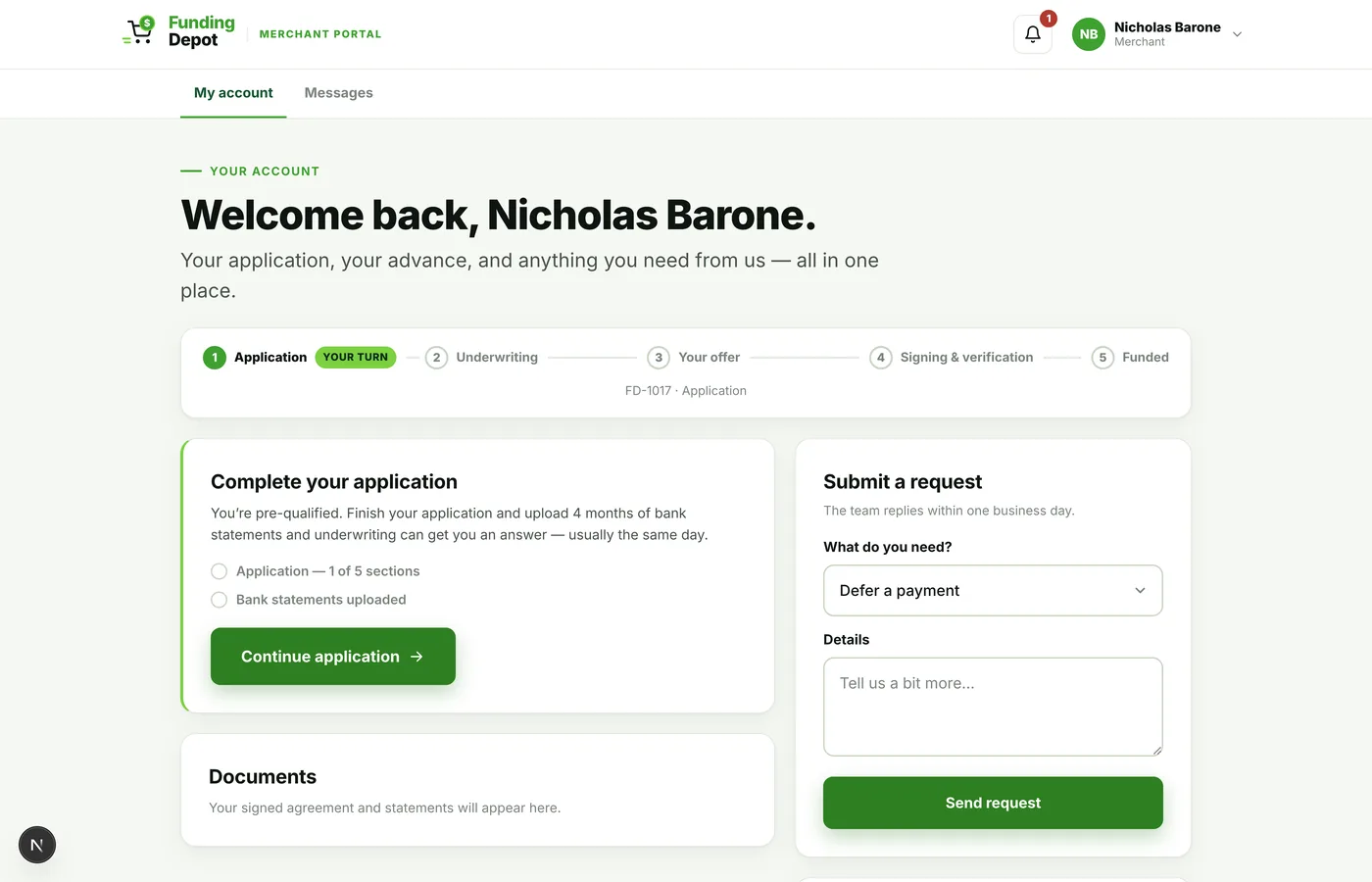
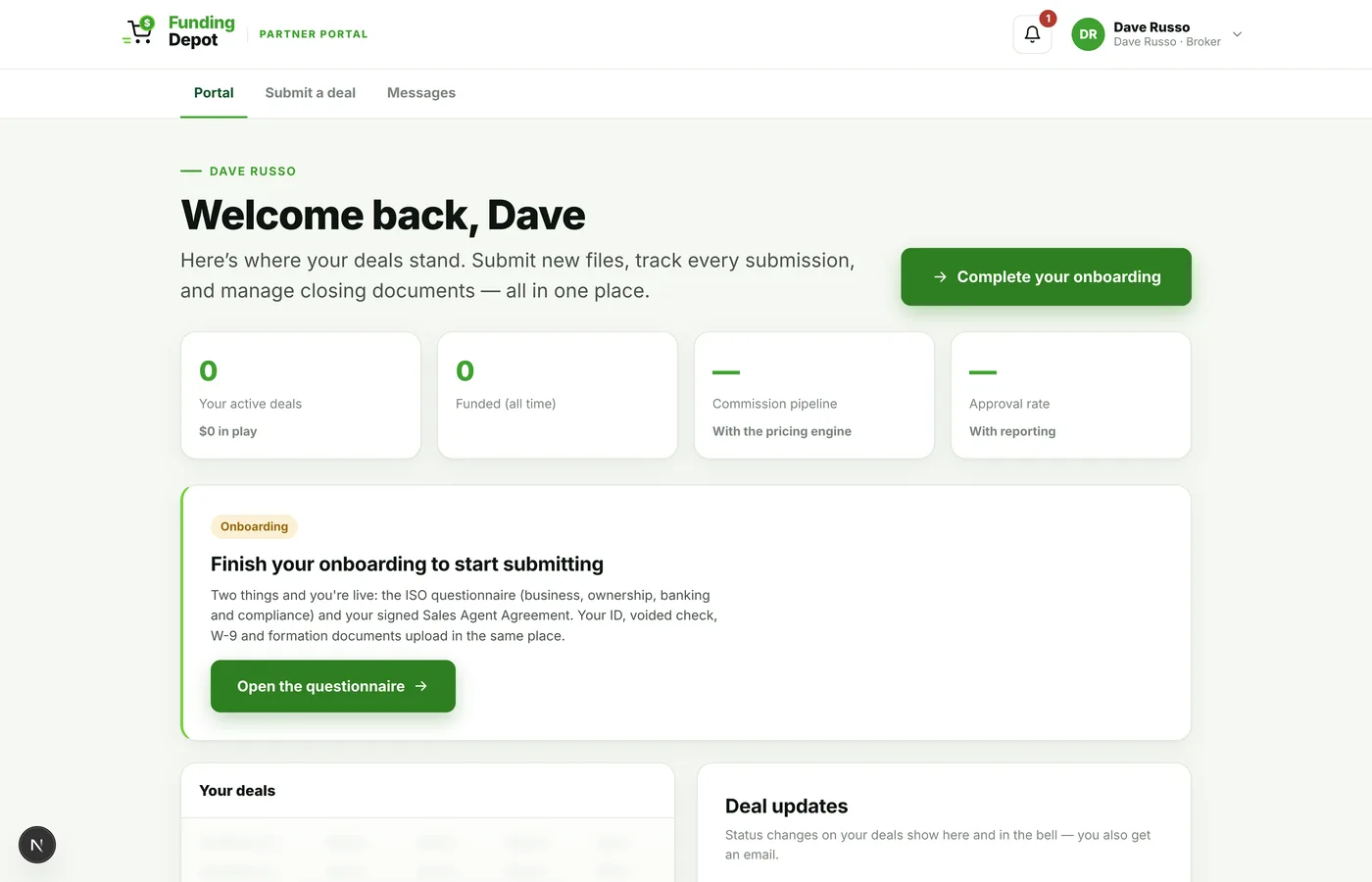
Behind them is the staff platform — pipeline, underwriting, pricing, contracts, funding, servicing and reporting. A merchant sees one deal. A broker sees their own book. Neither can see anything else, and that is enforced in the database, not in the interface.
And the site got rebuilt underneath it.
Twenty pages instead of a form — every question a borrower asks before they borrow.
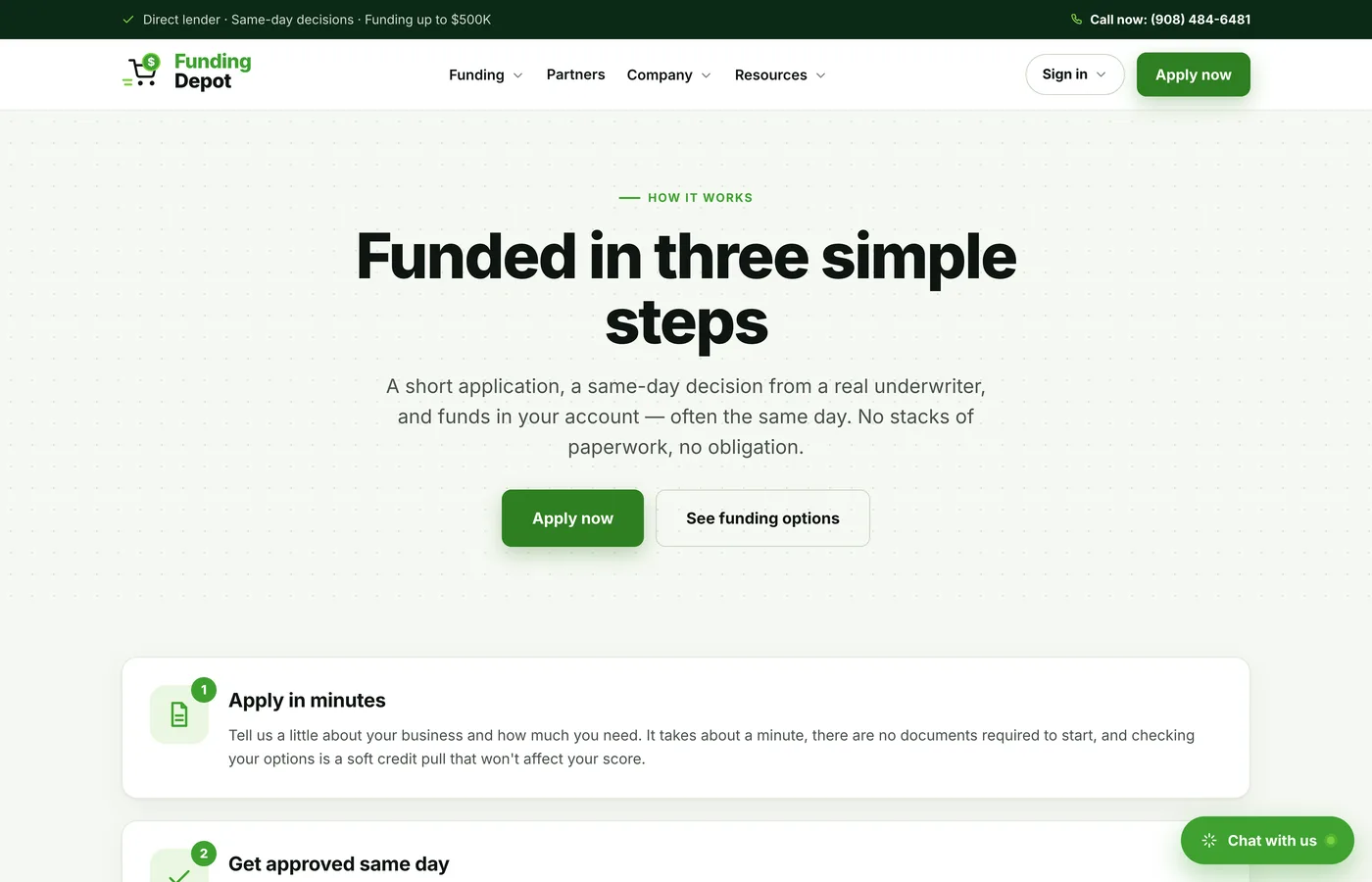
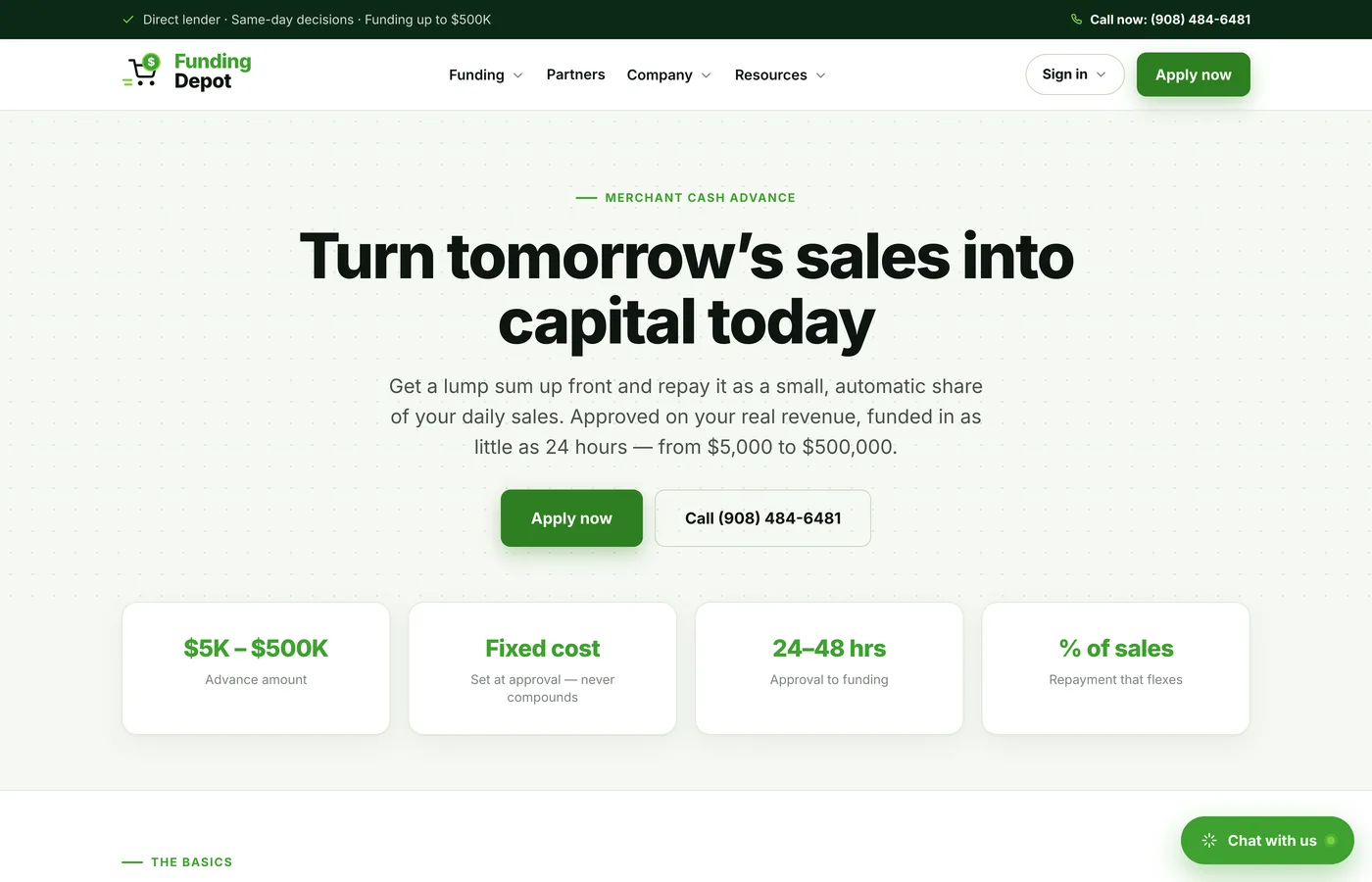
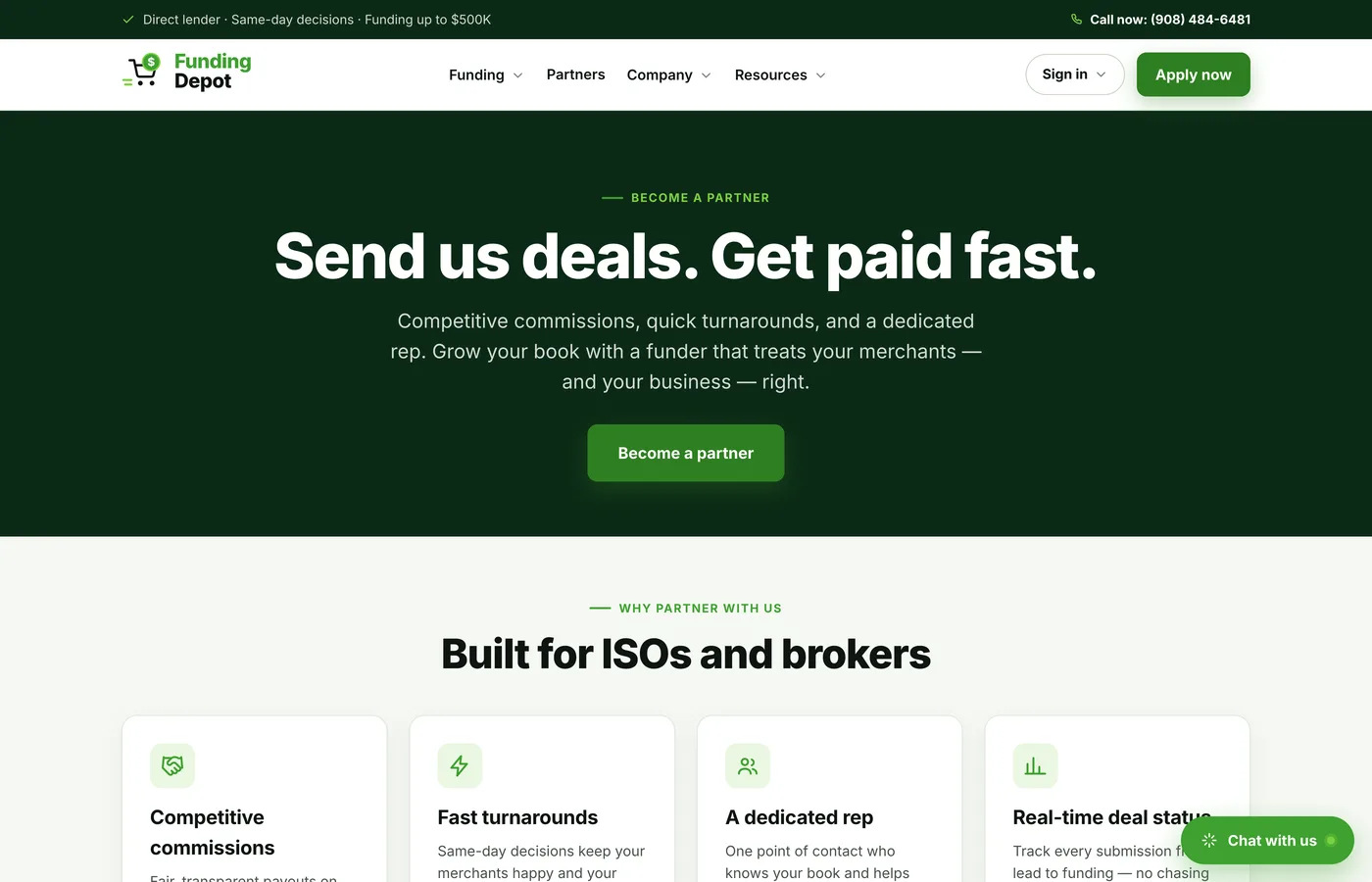
An application started on the marketing site is a deal in the platform before anyone opens it. There is no import step, because there is no second system.
What they own instead of rent.
Four products a funder this size normally pays four companies for. Each one is now part of the platform.
Deposits, debits, daily balances, NSFs, negative days and existing advances — pulled off the PDF and checked against the totals the statement prints on its own pages.
The merchant agreement is generated from the offer, signed in the portal, and the executed PDF is written once with its audit footer. No per-envelope fee, no third party holding the document.
One record from application to wire, with the underwriting checks, the pricing and the servicing schedule attached to the deal rather than living in someone's spreadsheet.
Built as part of the same system, so an application started on the marketing site is already a deal by the time anyone opens it.
The monthly doesn't buy access to any of it — they already own it. It buys the next version.
Going live was the start of it.
The marketing and the platform are both ongoing engagements, not a project that finished.
It's too early to tell you what it did. It went live this week. When there are numbers worth printing — applications that arrive complete, deals decided the same day, statements read without anyone opening a PDF — they will go here.
Renting the software your business runs on?
Thirty minutes. Tell us which parts you'd rather own.
“I've been building since the yellow pages mattered more than the internet.”Tony · Founder, LFG Ventures